What Is RFID?
Radio-Frequency Identification (RFID) is a technology that uses radio waves to identify and track objects, people, or animals. It involves the use of small electronic devices called RFID tags or transponders, which are attached to or embedded in the items to be tracked. RFID technology has found applications in various industries, ranging from retail and logistics to healthcare and access control.
The core components of an RFID system include RFID tags, RFID readers, and a backend system for data processing and storage. Here’s an overview of how RFID works:
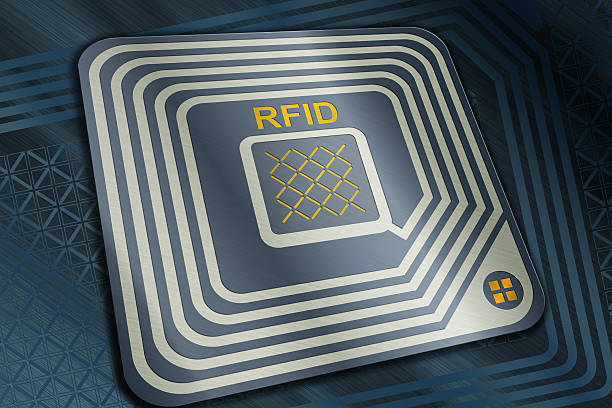
- RFID Tags: RFID tags are small, electronic devices that consist of a microchip and an antenna. The microchip contains a unique identifier and, in some cases, additional data. The antenna allows the tag to communicate with RFID readers using radio waves.
- RFID Readers: RFID readers are devices that send and receive radio signals to communicate with RFID tags. They use antennas to send out electromagnetic waves that power the RFID tags within their range. When an RFID tag receives the signal, it responds by transmitting its unique identifier and any other relevant data.
- Frequencies: RFID systems operate at different frequency ranges, including low frequency (LF), high frequency (HF), and ultra-high frequency (UHF). Each frequency range has specific characteristics, affecting the range of communication, data transfer speed, and the type of applications for which it is suitable.
- Passive and Active RFID: RFID systems can be categorized as passive or active based on the power source of the RFID tags. Passive RFID tags do not have their own power source; instead, they draw power from the radio waves emitted by the RFID reader. Active RFID tags, on the other hand, have their own power source, typically a battery, enabling them to transmit signals over longer distances.
- Applications of RFID: RFID technology is widely used for various purposes, including:
- Privacy and Security Considerations: While RFID technology offers many benefits, concerns have been raised about privacy and security. The unique identifiers on RFID tags could potentially be exploited if not properly secured. Organizations implementing RFID systems must address these concerns by implementing encryption, access controls, and other security measures.
- Supply Chain Management: RFID helps track the movement of goods through the supply chain, improving inventory management and reducing errors.
- Access Control: RFID cards or key fobs are used for secure access to buildings, rooms, or vehicles.
- Retail: RFID is employed for inventory tracking, theft prevention, and improving the efficiency of the checkout process.
- Healthcare: RFID tags are used to identify patients, track medical equipment, and manage inventory in healthcare settings.
RFID technology continues to evolve, with ongoing advancements enhancing its capabilities and expanding its range of applications. As it becomes more integrated into various industries, RFID plays a crucial role in improving efficiency, traceability, and overall operational effectiveness.